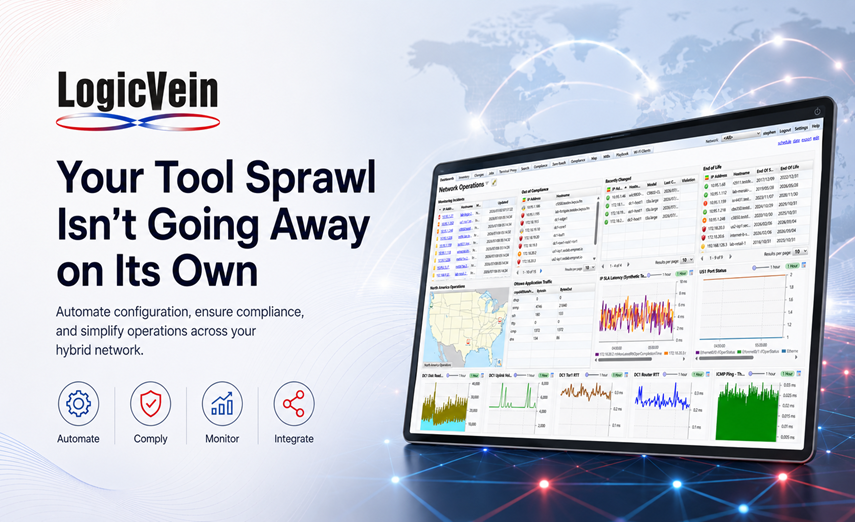

Your Tool Sprawl Isn't Going Away on Its Own
Most networking teams use between four and ten monitoring and troubleshooting tools to manage their environments, a number that hasn't moved in over a decade. And only 36% of teams fully trust their monitoring data, which breeds frustration and inefficiency every time something needs troubleshooting, leading to the next common question: What do we need to solve this issue? So how are teams trying to fix this? Often with... another tool. Sometimes with a shiny new label slapped on top and little else changed underneath. Sound familiar?
Nearly three-quarters of practitioners say they're considering replacing their tools within the next two years and consolidating existing platforms. If you're thinking the same thing, you're not alone.
So what should you actually keep in mind as you consolidate and cut the sprawl?
1. Start with a complete inventory
What are you paying for? What's being used? What's been built in-house? Who has access, who owns it, and who's footing the bill? Who needs to be included in this process?
You can't consolidate what you haven't inventoried.
2. Evaluate your gaps
Where are the holes in current coverage? What's on each vendor's roadmap? And what ROI data can you actually capture with your existing processes, so you have a baseline to measure improvement against?
What data do you have access to today, and where do you need to be?
3. Prioritize function, then integration flexibility
There's rarely a single tool that does it all without some kind of tradeoff; price, vendor lock-in, and complexity all deserve real consideration as you plan the next one to three years.
Pick the tool that solves the core problem first; worry about how well it plays with others as a close second.
4. Time it around natural transition points
End-of-life notices and license expirations are the easiest moments to bring on new tools and retire old ones.
You're already re-evaluating the budget line, so use that momentum.
5. Think enterprise-wide, not team-by-team
If a tool meets all your in-scope requirements, does it also plug gaps for other teams? Consolidation works best as an organization-wide effort, not something each team tackles in isolation.
Look for overlap that could save other groups effort and budget too. It strengthens the business case and reduces the odds you're back here again in two years.
6. Be honest about skills
Do you have the expertise to deploy these tools to their full capability, and to actually run them well on day two and beyond?
A powerful platform that nobody on the team can fully operate isn't really consolidation; it's just a more expensive single point of failure.
7. Document everything
This matters more than usual right now.
The tech sector has already seen roughly 139,000 job cuts in 2026 alone, up 83% year over year, and while that figure spans the broader tech industry rather than networking teams specifically, the underlying risk applies just as much here: institutional knowledge walks out the door with the people who hold it.
Thorough documentation shortens onboarding for whoever comes next and keeps the same mistakes from getting made twice.
8. Prioritize tools that share data and automate well
A tool that plays nicely across silos: sharing data, automating handoffs, cutting down on manual correlation, does more to reduce fragmentation and complexity than any single point solution ever will.
That's the real fix for tool sprawl: not another standalone product, but something built to work with what you already have.
Consolidation isn't a one-time project; it's an ongoing discipline. But teams that inventory honestly, time their moves well, and document as they go tend to come out the other side with fewer tools, headaches, and a lot more trust in the data they're staring at every day.
As you work through your own strategy, it's worth knowing what's already out there to help. LogicVein has spent decades helping network teams automate configuration, compliance, and push/pull workflows across more than a hundred vendors. Net LineDancer and ThirdEye Suite are built to integrate with what you already run, so you're not forced into a rip-and-replace just to get real consolidation.
Whether that single pane of glass ends up being ours or one you've already invested in, the goal is the same: fewer tools fighting each other, and a lot more clarity about what's actually happening on your network.
Final Takeaway
With LogicVein, you don’t just react to changes — you control them.
Watch our series of videos here or see all our features here.
With its combination of discovery, monitoring, compliance, and automation, LogicVein transforms how IT teams manage complex network environments.
Whether you’re looking to reduce manual work, improve network reliability, or gain better visibility into device configurations, LogicVein will provide you the tools you need—all in a single platform.
Ready to see LogicVein in action? Request a Demo and discover how you can simplify operations, improve reliability, and gain full network visibility.